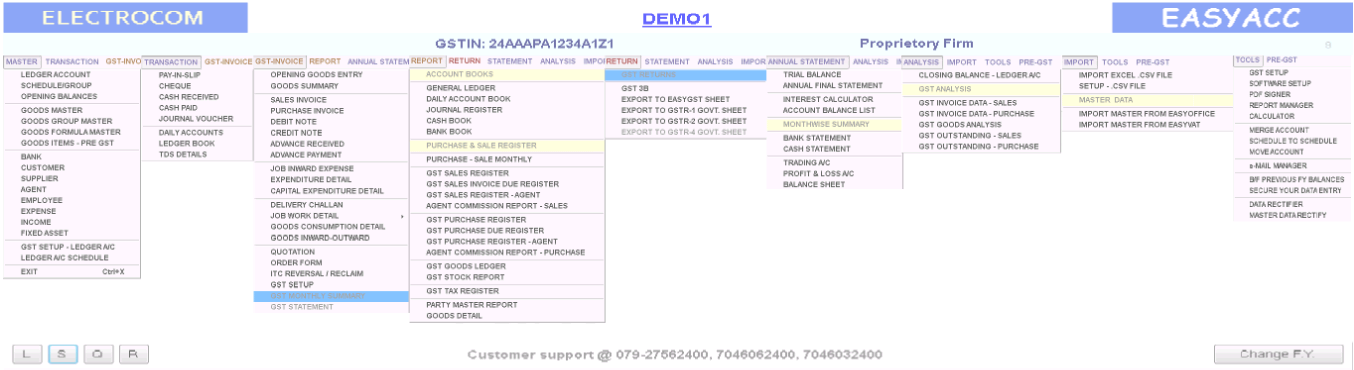
EasyACC - Easy, Effective & Efficient GST Ready Financial Accounting Software
Share your own stories, experiences, or anecdotes about Indian family lifestyle in the comments below. What are some of your favorite family traditions or memories? How have Indian family values influenced your life? Let's keep the conversation going!
In India, the joint family system is still prevalent, where multiple generations live together under one roof. This setup fosters a sense of unity, cooperation, and mutual respect among family members. The elderly members of the family are revered for their wisdom, experience, and guidance, while the younger members learn valuable life lessons, traditions, and cultural values from them. For example, in many Indian families, the grandmother (or "Dadi" or "Baachi") plays a vital role in passing down family recipes, traditions, and cultural values to the younger generation.
Indian families place a high value on education and career, with parents often making significant sacrifices to ensure their children receive the best possible opportunities. However, balancing modern career aspirations with traditional values can be a challenge. Many Indian families are navigating the complexities of urbanization, migration, and globalization, which can lead to cultural and social changes. For example, many Indian families are struggling to maintain their traditional values and customs in the face of modernization and urbanization.
"I remember my childhood spent in a joint family in Mumbai," says Rohini, a 30-year-old marketing professional. "Every morning, our entire family would gather for a quick breakfast, followed by a lively discussion on current events, politics, or sports. My grandmother, or 'Dadi,' would regale us with stories of our ancestors and the freedom struggle. Evenings were spent playing board games, watching Bollywood movies, or practicing yoga together. Those were magical times, and I cherish the memories of my childhood in a joint family."
As India continues to urbanize and modernize, Indian families are facing new challenges and changes. The rise of nuclear families, increased mobility, and changing social norms are redefining traditional family structures and relationships. However, despite these changes, Indian families remain strong and resilient, adapting to the demands of modern life while staying true to their cultural heritage. For example, many Indian families are embracing modern technology, such as video calls and social media, to stay connected with their loved ones who live far away.
The role of women in Indian families has undergone significant changes in recent years. While traditional expectations still prevail, many women are now pursuing careers, education, and personal goals. The matriarch of the family often plays a crucial role in maintaining family harmony, managing household responsibilities, and passing down traditions to the younger generation. For instance, in many Indian families, the mother (or "Maa") is the glue that holds the family together, managing the household, caring for the children, and maintaining family relationships.
We make your business accounting & GST Reporting easy
Share your own stories, experiences, or anecdotes about Indian family lifestyle in the comments below. What are some of your favorite family traditions or memories? How have Indian family values influenced your life? Let's keep the conversation going!
In India, the joint family system is still prevalent, where multiple generations live together under one roof. This setup fosters a sense of unity, cooperation, and mutual respect among family members. The elderly members of the family are revered for their wisdom, experience, and guidance, while the younger members learn valuable life lessons, traditions, and cultural values from them. For example, in many Indian families, the grandmother (or "Dadi" or "Baachi") plays a vital role in passing down family recipes, traditions, and cultural values to the younger generation. free hindi comics savita bhabhi episode 32 pdfl top
Indian families place a high value on education and career, with parents often making significant sacrifices to ensure their children receive the best possible opportunities. However, balancing modern career aspirations with traditional values can be a challenge. Many Indian families are navigating the complexities of urbanization, migration, and globalization, which can lead to cultural and social changes. For example, many Indian families are struggling to maintain their traditional values and customs in the face of modernization and urbanization. Share your own stories, experiences, or anecdotes about
"I remember my childhood spent in a joint family in Mumbai," says Rohini, a 30-year-old marketing professional. "Every morning, our entire family would gather for a quick breakfast, followed by a lively discussion on current events, politics, or sports. My grandmother, or 'Dadi,' would regale us with stories of our ancestors and the freedom struggle. Evenings were spent playing board games, watching Bollywood movies, or practicing yoga together. Those were magical times, and I cherish the memories of my childhood in a joint family." Let's keep the conversation going
As India continues to urbanize and modernize, Indian families are facing new challenges and changes. The rise of nuclear families, increased mobility, and changing social norms are redefining traditional family structures and relationships. However, despite these changes, Indian families remain strong and resilient, adapting to the demands of modern life while staying true to their cultural heritage. For example, many Indian families are embracing modern technology, such as video calls and social media, to stay connected with their loved ones who live far away.
The role of women in Indian families has undergone significant changes in recent years. While traditional expectations still prevail, many women are now pursuing careers, education, and personal goals. The matriarch of the family often plays a crucial role in maintaining family harmony, managing household responsibilities, and passing down traditions to the younger generation. For instance, in many Indian families, the mother (or "Maa") is the glue that holds the family together, managing the household, caring for the children, and maintaining family relationships.
Inward / Outward Management
Sales Invoice -with Multiple format as per user requirement
Challan printing
Half page Invoice printing
Preparation of Order from
Preparation of Quotation
Cash/Special discount
View last Sales price of Goods & All Bills of party while Billing
Item price with Inclusive / Exclusive Tax
Agent wise / Sales person wise Comission calculation & Reports
INVENTORY
Goods Ledger
& Summary
Minimum-Maximum
stock indication
Stock
Reports
Negative
Stock Indication
FINAL ACCOUNTS
Trial
Balance
Trading Account
Profit & Loss Account
Balance Sheet
& Schedules
Depreciation
Statement
GST REPORTS
Auto Generate Excel Reports for
GSTR 1, GSTR 2, GSTR 3B, GSTR 4
GST
Tax Register
EASYACC is a complete
GST-enabled accounting software
TDS Management
Deduction of TDS
As per the norms
Generation of TDS Reports
& Export in Excel
REPORTS
MIS Reportes with
Multiple Analysis
Report output on
screen & Printer
Report export facility to
PDF, HTML, Word, Excel, etc...
Self Designed Reports with
columns selection & preferences
Search / Sort / Filter
in all screen & reports
Why to choose EASYACC for accounting ?
Easy
Use
Competitive
Pricing
GST
Compliant
Customizable
Software
Trusted by
Thousands of users
Expert
Team